Someone returns after a long vacation, a colleague comes back to work, or a friend you have not seen in months walks through the door. You want to greet them warmly, but saying “welcome back” every time can start to feel repetitive. Finding the right welcome back synonym helps you make your greeting more personal, natural, and appropriate for the situation.
There are plenty of alternatives, ranging from simple expressions like “good to have you back” to more enthusiastic phrases such as “look who’s back!” Some work best in professional emails, while others feel more comfortable in casual conversations, text messages, and social media captions.
In this guide, you will discover the best synonyms for welcome back, learn when to use each expression, and explore examples that make choosing the right words easier.
What Is Another Word for Welcome Back?
A welcome back synonym is a word or phrase used to greet someone who has returned after being away. The best alternative depends on your relationship with the person, the reason for their absence, and the tone you want to convey.
Here are some of the most useful alternatives:
- Good to have you back: Friendly and suitable for professional or personal situations.
- It’s great to see you again: Warm, natural, and conversational.
- Glad you’re back: Short, sincere, and informal.
- Welcome home: Ideal for someone returning home or to a familiar place.
- Nice to have you back: Polite and appropriate for colleagues or classmates.
- We’ve missed you: Expresses affection and emphasizes someone’s absence.
- Look who’s back!: Playful and casual.
- Happy to see you again: Positive and welcoming.
- It’s good to see you again: A versatile expression for different settings.
- Great to have you with us again: Particularly useful in workplaces, teams, and organizations.
Although these expressions share a similar purpose, they do not communicate exactly the same feeling. For example, “welcome home” suggests a sense of belonging, while “glad you’re back” focuses on happiness about someone’s return.
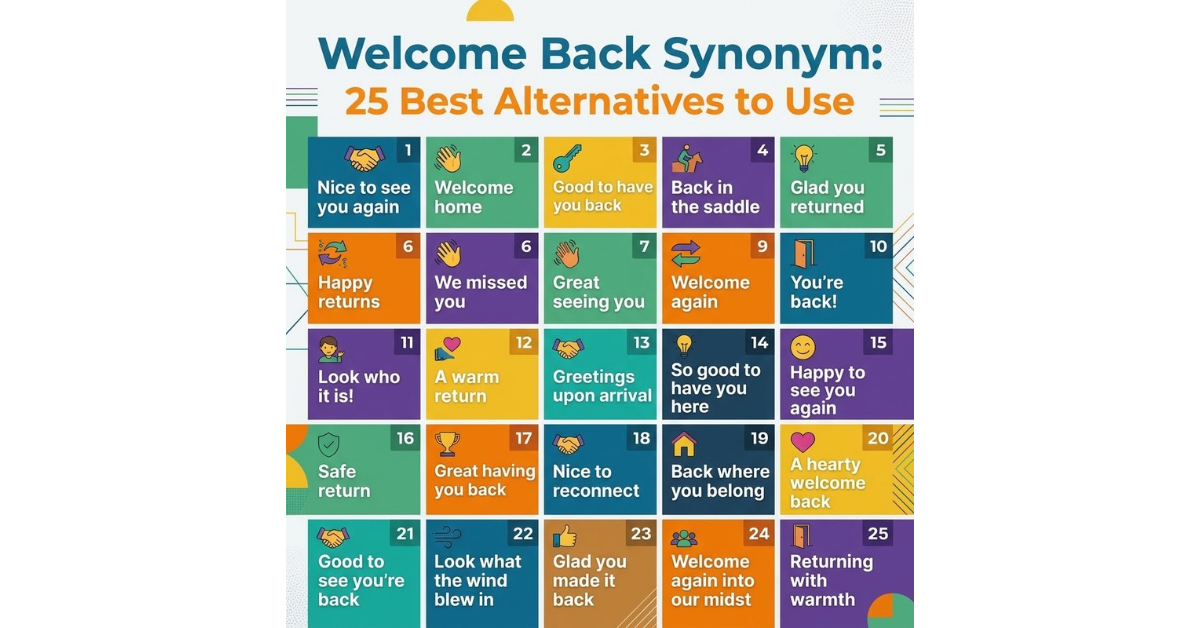
25 Best Welcome Back Synonyms and Alternatives
The following expressions can help you avoid repetition while keeping your greeting appropriate and genuine.
1. Good to Have You Back
This is one of the most versatile alternatives to “welcome back.” It sounds warm without being overly emotional, making it suitable for workplaces, schools, clubs, and personal conversations.
Example: “Good to have you back! We have a lot to catch up on.”
2. Glad You’re Back
Use this phrase when you want to communicate happiness about someone’s return in a simple, direct way.
Example: “Glad you’re back! I hope you had a relaxing vacation.”
3. It’s Great to See You Again
This expression works especially well when greeting someone face-to-face after a long absence. It feels personal and enthusiastic without sounding exaggerated.
Example: “It’s great to see you again after all these months.”
4. Nice to Have You Back
“Nice to have you back” is a polite alternative that works well in professional and educational settings.
Example: “Nice to have you back on the team. We hope you enjoyed your time away.”
5. Welcome Home
Choose this expression when someone returns to their house, hometown, family, or another place where they feel they belong.
Example: “Welcome home! We’ve been looking forward to seeing you.”
6. We’ve Missed You
This phrase adds an emotional touch to your greeting. It is especially appropriate for friends, family members, close colleagues, or team members whose presence was noticed.
Example: “We’ve missed you around here. It’s wonderful to have you back.”
7. Great to Have You With Us Again
This alternative is ideal for returning employees, students, volunteers, or members of a group.
Example: “Great to have you with us again after your leave.”
8. Happy to See You Again
Use this expression when you want your greeting to sound friendly and positive.
Example: “Happy to see you again! How have you been?”
9. It’s Good to See You Again
This is a natural, flexible alternative that works in both personal and professional conversations.
Example: “It’s good to see you again. I hope everything has been going well.”
10. Look Who’s Back!
This playful phrase is best reserved for people you know well. Depending on your tone and relationship, it can sound affectionate, humorous, or slightly teasing.
Example: “Look who’s back! The office hasn’t been the same without you.”
11. Welcome Aboard Again
This phrase can work when someone is rejoining a team, organization, or group. However, “welcome aboard” is more commonly associated with joining a group for the first time, so “welcome back to the team” may sound more natural in many situations.
Example: “Welcome aboard again! We’re excited to work with you.”
12. It’s Wonderful to Have You Back
This expression communicates stronger enthusiasm than “nice to have you back.” It works well when someone’s return is especially meaningful.
Example: “It’s wonderful to have you back with us after your sabbatical.”
13. So Happy You’re Back
This warm, informal greeting is useful for friends, family, and close colleagues.
Example: “I’m so happy you’re back! We have so much to talk about.”
14. Welcome Back to the Team
This is a direct and professional phrase for a colleague returning from leave, a temporary assignment, or an extended absence.
Example: “Welcome back to the team, Sarah. I hope your first week goes smoothly.”
15. Glad to Have You Around Again
This alternative emphasizes how much someone’s presence contributes to a place or group.
Example: “Glad to have you around again. Things are always more fun when you’re here.”
16. It’s Been Too Long
Use this phrase when you have not seen someone for a considerable period. It opens the door to reconnecting rather than simply acknowledging their return.
Example: “It’s been too long! We should catch up over coffee.”
17. Good to See You Back
This short expression is straightforward and friendly. It works in everyday conversations, classrooms, workplaces, and community settings.
Example: “Good to see you back in class. We saved you a seat.”
18. Welcome Back, Stranger!
This humorous expression is often used with friends you have not seen in a while. It can sound playful, but it may feel sarcastic if the relationship is not close.
Example: “Welcome back, stranger! Where have you been hiding?”
19. Great to See You Again
This is a simple, upbeat alternative suitable for both acquaintances and close friends.
Example: “Great to see you again! How was your trip?”
20. We’ve Been Waiting for You
This phrase can create excitement when someone returns to a group or event. Use it carefully, as it may suggest impatience or pressure in certain contexts.
Example: “We’ve been waiting for you! The reunion wouldn’t be complete without you.”
21. It’s Good to Have You Here Again
This phrase works when someone returns to a familiar place, gathering, or organization.
Example: “It’s good to have you here again for this year’s conference.”
22. Welcome Back to Your Happy Place
This cheerful alternative suits informal settings, social media captions, and places someone particularly enjoys.
Example: “Welcome back to your happy place. The beach was waiting for you!”
23. Back Where You Belong
This expression emphasizes belonging and familiarity. It is often used with close friends, family, teammates, or people returning to a community.
Example: “Back where you belong! The team feels complete again.”
24. Look Forward to Having You Back
This is a professional expression for situations where a person’s return is planned but has not happened yet. Unlike most alternatives on this list, it is prospective rather than a greeting for someone who has already returned.
Example: “We look forward to having you back in the office next Monday.”
25. It’s Lovely to Have You Back
This polite, warm expression is especially suitable for professional environments, schools, community groups, and personal greetings.
Example: “It’s lovely to have you back with us. I hope you’ve had a refreshing break.”
Welcome Back Synonyms for Different Situations
Not every greeting fits every occasion. A phrase that sounds natural between friends may feel too casual in a business email. Choosing an alternative based on context helps you communicate the right message.
Welcome Back Synonyms for Work
When greeting a returning colleague or employee, aim for a professional but friendly tone. You can acknowledge their return without asking personal questions about their time away.
Good choices include:
- Good to have you back.
- Welcome back to the team.
- It’s great to have you with us again.
- Nice to see you back in the office.
- We’re glad to have you back.
- I hope you had a refreshing break.
Example for a coworker:
“Welcome back! I hope you had a relaxing vacation. I’ll help you catch up on anything you missed.”
Example for a manager or employee returning from leave:
“It’s great to have you back on the team. Please let me know if you need any updates or support as you settle in.”
For sensitive situations, such as returning from medical or bereavement leave, a simple “It’s good to have you back” is often more considerate than asking for details.
Welcome Back Synonyms for Friends
With friends, your greeting can be more relaxed, affectionate, or humorous. You can also refer to shared memories or plans.
Consider these alternatives:
- So happy you’re back!
- We’ve missed you!
- Look who’s back!
- It’s been too long!
- Finally, you’re back!
- Things weren’t the same without you.
- Let the catching up begin!
Example: “You’re finally back! We’ve missed you so much. Let’s plan a proper catch-up this weekend.”
These expressions work best when they reflect your genuine feelings. If you have not been particularly close lately, “It’s great to see you again” may sound more natural than an emotional statement.
Welcome Back Synonyms for Emails
Email greetings should match the relationship between the sender and recipient. Professional messages generally benefit from clarity and warmth rather than exaggerated enthusiasm.
Useful alternatives include:
- Welcome back to the team.
- It’s great to have you back.
- We’re pleased to welcome you back.
- I hope you had a restful break.
- It’s a pleasure to have you back with us.
- We look forward to working with you again.
Example email:
Subject: Welcome Back to the Team
Hi Alex,
It’s great to have you back! I hope you had a relaxing break.
I’ve shared the latest project updates with you so you can get up to speed. Please let me know if you have any questions.
Best regards,
Jordan
If the person is returning after a difficult personal experience, avoid assuming that their absence was enjoyable. A neutral greeting such as “It’s good to have you back” may be more appropriate.
Welcome Back Synonyms for Social Media
Social media greetings often use short, catchy expressions. These alternatives work well for Instagram captions, Facebook posts, team announcements, and reunion pictures.
- Guess who’s back!
- Back and better than ever.
- The comeback we’ve been waiting for.
- Look who’s back in town!
- Back where the magic happens.
- Reunited at last.
- The gang is together again.
- Home sweet home.
- Finally back where I belong.
- The wait is over!
Example captions:
- “Reunited at last! Some things never change.”
- “Guess who’s back in town?”
- “Back where the memories are made.”
- “The crew is complete again.”
- “Home sweet home, and it feels amazing.”
Remember that some of these are not exact synonyms for “welcome back.” They are related expressions that celebrate a return, reunion, or comeback.
Welcome Back Synonyms for School and College
A returning student may appreciate a greeting that makes them feel included and comfortable.
Try these expressions:
- Welcome back to class.
- Great to see you back at school.
- It’s good to have you in class again.
- We’re happy you’re back.
- Welcome back to campus.
- Glad you’re joining us again.
Example: “Welcome back to class! I’ll share the notes from the lessons you missed so you can catch up.”
Teachers should keep the greeting supportive and avoid drawing unnecessary attention to why the student was absent.
Welcome Back Synonyms for Customers and Clients
When a customer returns to a business, the greeting should be polite, professional, and focused on their experience.
Suitable alternatives include:
- Welcome back! How can we help you today?
- It’s a pleasure to see you again.
- We’re happy to serve you again.
- Thank you for coming back.
- It’s great to have you with us again.
- We’re glad to see you again.
Example: “Welcome back! It’s always a pleasure to assist you. How may we help today?”
For written marketing messages, “We’re glad to have you back” can also work for returning customers, especially when accompanied by a relevant update or loyalty offer.
Formal vs. Informal Alternatives to Welcome Back
One of the easiest ways to select a suitable greeting is to consider how formal the situation is.
| Formality | Alternative | Best use |
| Formal | We’re pleased to welcome you back. | Official messages and announcements |
| Professional | It’s great to have you back. | Workplace communication |
| Polite | It’s lovely to have you back. | Schools, organizations, and groups |
| Neutral | Good to see you again. | Everyday conversations |
| Friendly | Glad you’re back! | Friends and colleagues |
| Affectionate | We’ve missed you! | Close friends and family |
| Playful | Look who’s back! | Casual social settings |
| Humorous | Welcome back, stranger! | Friends who enjoy teasing |
The distinction is not absolute. For example, “We’ve missed you” can be appropriate in a workplace where colleagues have a close relationship. Likewise, “Good to see you again” can be suitable in both a business meeting and a casual reunion.
How to Choose the Right Welcome Back Synonym
A good greeting does more than acknowledge someone’s return. It shows that you understand the situation and care about how your words might be received.
Follow these steps to find the right alternative.
1. Consider Your Relationship
Start by thinking about how well you know the person.
- Close friend: “So happy you’re back!”
- Coworker: “Good to have you back.”
- Manager or client: “It’s a pleasure to have you back.”
- Family member: “Welcome home!”
- Acquaintance: “It’s nice to see you again.”
The more familiar the relationship, the more personal or playful your greeting can be.
2. Think About Why They Were Away
The reason for someone’s absence can influence which greeting feels appropriate.
Someone returning from a holiday may appreciate “I hope you had a wonderful vacation.” A colleague coming back after medical leave may prefer a straightforward “It’s good to have you back.”
Avoid assuming that every absence was enjoyable. Neutral, supportive language is often the safest option when you do not know the circumstances.
3. Match the Tone to the Setting
A professional email generally calls for a different tone from a group chat or reunion party.
For a workplace announcement, use “We’re pleased to welcome you back.” For a friendly text, “Finally, you’re back!” may sound more natural.
When in doubt, choose a simple expression that communicates warmth without being overly familiar.
4. Add a Personal Touch
A short additional sentence can make a common greeting feel more meaningful.
Instead of writing:
“Welcome back.”
Try:
“Welcome back! I hope your trip went smoothly. We’d love to hear about it when you have time.”
Personalization works best when it feels genuine rather than forced.
5. Avoid Overdoing It
Not every return requires a long greeting or a big emotional response. Sometimes, “Good to see you again” is all you need.
Keep your wording proportionate to the situation and give the other person room to respond naturally.
Common Mistakes When Using Welcome Back Alternatives
Even a friendly greeting can feel awkward if the wording does not suit the circumstances. Keep these common mistakes in mind.
Using overly casual language in formal settings: Expressions such as “Look who’s back!” may be inappropriate in official announcements or conversations with unfamiliar clients.
Assuming someone enjoyed their absence: “Hope you had an amazing break!” is fine for a holiday, but it may be insensitive when someone returns from a difficult period.
Using “welcome home” for every return: This phrase usually suggests a home, hometown, or place of belonging. “Good to have you back” is more versatile.
Making jokes about a long absence: “Welcome back, stranger!” can be funny among close friends but may sound critical if the relationship is less familiar.
Confusing a greeting with a future statement: “Welcome back” is used when greeting someone who has returned. “We look forward to having you back” is appropriate when their return is still in the future.
Choosing the right words is less about finding a perfect replacement and more about understanding the tone and meaning behind each expression.
Frequently Asked Questions
1. What is the best synonym for welcome back?
“Good to have you back” is one of the best all-purpose alternatives because it sounds warm, natural, and appropriate in many situations. Other useful options include “glad you’re back,” “nice to see you again,” and “it’s great to have you back.”
2. What is a more professional way to say welcome back?
Professional alternatives include “We’re pleased to welcome you back,” “It’s great to have you back on the team,” and “We’re glad to have you with us again.” Choose the version that best matches your workplace culture and relationship with the recipient.
3. What is another way to say welcome back to work?
You can say “Welcome back to the team,” “It’s good to have you back in the office,” or “I hope you had a refreshing break.” If the person is returning after a sensitive absence, a simple, supportive greeting is often best.
4. What is a casual way to say welcome back?
Casual alternatives include “Glad you’re back,” “Look who’s back,” “Finally, you’re back,” and “It’s been too long.” Use playful expressions when you know the person well enough to understand your intended tone.
5. Is “good to have you back” the same as “welcome back”?
The two expressions have very similar meanings, but their emphasis differs slightly. “Welcome back” directly greets someone upon their return, while “good to have you back” emphasizes how much their presence is appreciated.
6. How do you say welcome back in an email?
Start with a greeting such as “Hi Alex,” followed by “It’s great to have you back!” You can add a sentence about sharing updates, offering support, or helping the recipient settle back into their routine.
7. What is a warm way to welcome someone back after a long absence?
Try “It’s so good to see you again,” “We’ve missed you,” or “I’m really happy you’re back.” If the absence involved a difficult experience, choose a supportive expression that does not pressure the person to explain what happened.
8. What is a funny synonym for welcome back?
“Look who’s back!” and “Welcome back, stranger!” are popular playful alternatives. “Guess who’s back!” is another option, particularly for social media posts and informal conversations.
9. Can I use “welcome home” instead of “welcome back”?
Yes, when the person is returning to their home, hometown, family, or another place they consider home. For a colleague returning to work or a student returning to class, “welcome back” or “good to have you back” is generally more suitable.
10. How can I make a welcome back message sound more genuine?
Use words that reflect your actual relationship with the person, acknowledge their return naturally, and add a personal detail when appropriate. A short, sincere message usually feels more genuine than an exaggerated greeting.
Conclusion
Finding the right welcome back synonym is an easy way to make everyday conversations more engaging and meaningful. Whether you are greeting a colleague, reconnecting with a friend, welcoming a customer, or writing a social media caption, the best alternative depends on your relationship, the situation, and the tone you want to convey.
For a versatile option, choose “good to have you back.” If you want something warmer, try “it’s great to see you again” or “we’ve missed you.” For professional communication, “we’re pleased to welcome you back” is a reliable choice, while playful alternatives such as “look who’s back!” work well with friends.
The next time someone returns, choose a greeting that feels natural rather than relying on the same words every time. You can also explore related synonym guides to discover more ways to make your writing clearer, warmer, and more expressive.