Technology is changing how businesses operate, communicate, and protect their information. As a result, people with practical IT knowledge are finding opportunities in areas such as cybersecurity, cloud computing, networking, software development, and artificial intelligence. But getting started can feel overwhelming, especially when you are unsure which skills to learn or which certification will actually help your career.
That’s where the droven.io IT certification guide comes into the picture. People searching for this topic generally want to understand how Droven.io relates to professional IT education, what learning opportunities it provides, and how they can use technology resources to build a successful career.
One important distinction is worth making from the beginning: Droven.io should be approached as a technology information and learning resource, not as an established certification authority. Reading an educational article does not automatically earn you a professional credential. Recognized certifications are awarded by organizations that administer their own examinations and credentialing programs.
In this guide, we’ll explore what Droven.io is, how to use technology learning resources effectively, which IT certifications are worth considering, and how to build a practical learning plan that supports your career goals.
What Is Droven.io?
Droven.io is associated with online technology content covering subjects such as artificial intelligence, cloud computing, cybersecurity, software, and digital transformation. Its material can help readers explore technical topics, understand emerging developments, and become familiar with different areas of the IT industry.
For someone beginning an IT career, this type of information can be a useful starting point. Before committing to a particular certification, it helps to understand what different technology fields involve and which skills employers expect.
However, there is an important difference between learning about a certification and receiving one.
A technology website can:
- Explain IT concepts and industry terminology.
- Introduce different technology career paths.
- Discuss cloud platforms and cybersecurity developments.
- Help readers understand technical tools and software.
- Provide general information about professional certifications.
An official certification provider, on the other hand, establishes examination requirements, evaluates candidates, and awards credentials to people who successfully meet its standards.
The key takeaway: Use Droven.io-related educational content to explore technology topics, but verify certification requirements and registration details through the organization that actually issues the credential.
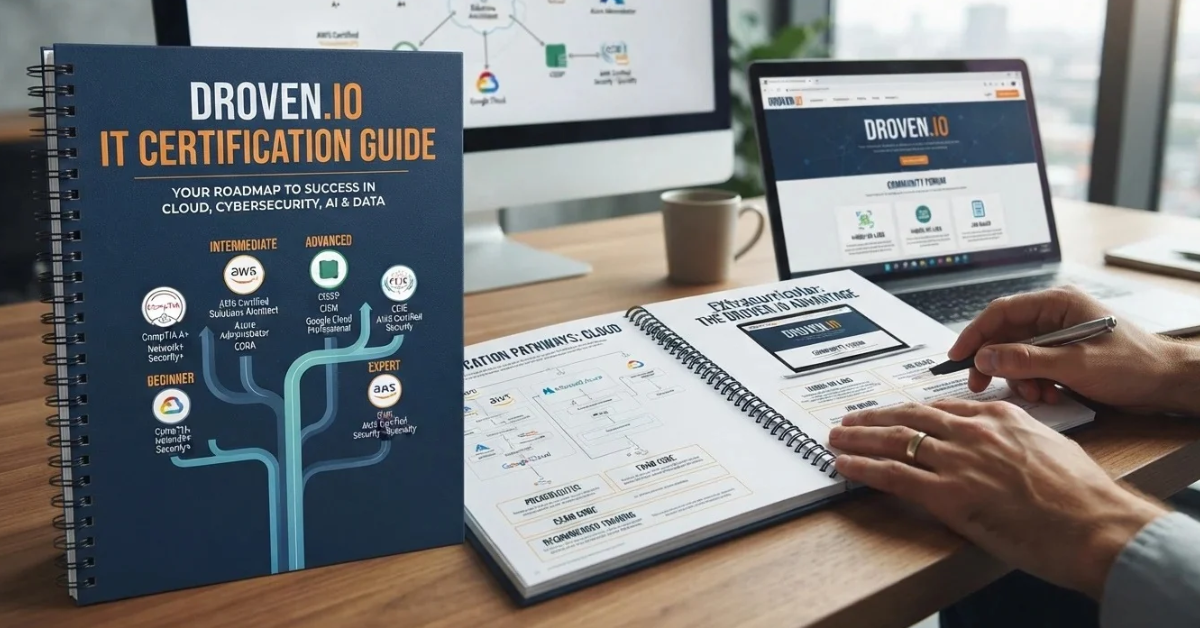
Understanding the Droven.io IT Certification Guide
The main purpose of an IT certification guide is to help learners understand their options before investing time and money in professional development.
IT certifications are available at different experience levels. Some introduce basic computer and networking concepts, while others assess advanced knowledge of cloud architecture, information security, infrastructure management, and enterprise technology.
A useful certification roadmap generally answers five questions:
- What IT field do you want to enter?
- What technical knowledge do you already have?
- Which certification matches your current experience?
- What examination and preparation requirements apply?
- How will you demonstrate your skills in a practical environment?
Thinking through these questions makes the learning process more focused. Instead of collecting certificates without a clear direction, you can work toward qualifications that support a specific professional goal.
Popular IT Certification Paths to Explore
Not every IT certification is designed for the same type of professional. Your best option depends on your interests, current knowledge, and the kind of work you eventually want to perform.
Here are some established certification pathways worth researching.
1. CompTIA Certifications
CompTIA is a well-known organization offering vendor-neutral IT certifications. Its qualifications cover foundational technology knowledge, networking, cybersecurity, and infrastructure.
Some popular options include:
- CompTIA A+: Covers computer hardware, operating systems, troubleshooting, and IT support.
- CompTIA Network+: Focuses on networking concepts, infrastructure, connectivity, and network troubleshooting.
- CompTIA Security+: Introduces important cybersecurity concepts, including risk management, security operations, and threat mitigation.
CompTIA A+ can be a reasonable starting point for someone interested in technical support. Network+ is useful for learners who want to understand how computer networks operate, while Security+ provides a foundation for pursuing cybersecurity-related responsibilities.
2. Cisco Networking Certifications
Cisco certifications are particularly relevant to people interested in networking and enterprise infrastructure.
One of the best-known options is the Cisco Certified Network Associate (CCNA).
The CCNA covers several important networking areas, including:
- Network fundamentals.
- IP connectivity.
- Network access.
- IP services.
- Security fundamentals.
- Automation and programmability basics.
Learning these subjects can help prepare candidates for networking positions involving routers, switches, network configuration, and troubleshooting.
Cisco certifications are especially worth exploring if you enjoy understanding how computers and business systems communicate.
3. AWS Cloud Certifications
Cloud computing has become an important part of modern IT infrastructure. Organizations use cloud platforms to host applications, store information, manage computing resources, and support business operations.
Amazon Web Services (AWS) provides several certifications for different experience levels.
Examples include:
- AWS Certified Cloud Practitioner: Introduces cloud concepts, AWS services, security, and pricing.
- AWS Certified Solutions Architect – Associate: Focuses on designing secure, reliable, and cost-effective cloud solutions.
- AWS Certified Developer – Associate: Covers developing and maintaining applications on AWS.
For beginners, Cloud Practitioner can provide a useful introduction. People with some technical experience may prefer a more specialized certification.
4. Microsoft Azure Certifications
Microsoft Azure is another major cloud computing platform used by businesses around the world.
Microsoft offers role-based certifications that cover cloud administration, development, security, and data-related responsibilities.
Some options to investigate include:
- Microsoft Azure Fundamentals (AZ-900): Introduces cloud computing and core Azure services.
- Azure Administrator Associate (AZ-104): Covers managing Azure identities, storage, networking, and computing resources.
- Azure Developer Associate (AZ-204): Focuses on developing cloud-based applications and services.
These certifications may be particularly relevant if you want to work with Microsoft technologies or organizations that rely heavily on Azure infrastructure.
5. Cybersecurity Certifications
Cybersecurity is another major area of professional development. Businesses need people who understand how to identify security weaknesses, protect sensitive information, investigate suspicious activity, and reduce digital risks.
Some recognized certifications include:
- CompTIA Security+.
- Certified Ethical Hacker (CEH).
- Certified Information Systems Security Professional (CISSP).
- Certified Information Security Manager (CISM).
These credentials serve different audiences. Security+ is commonly considered an early-career option, while CISSP and CISM are intended for more experienced professionals with specific eligibility requirements.
It is important to review those requirements before choosing an advanced certification.
Why Are IT Certifications Important?
A professional certification can provide evidence that you have studied a particular subject and met an established assessment standard.
Although certificates cannot guarantee employment, they can strengthen your professional profile when combined with relevant experience and practical abilities.
Here are some important benefits.
Improved Technical Knowledge
Preparing for an IT examination encourages structured learning. Instead of studying random topics, you follow a defined set of objectives covering the knowledge expected in a particular professional area.
For example, someone preparing for Network+ studies networking infrastructure, troubleshooting, security, and connectivity in an organized way.
Better Career Opportunities
Some employers include professional certifications in their job descriptions or consider them valuable when evaluating applicants.
A relevant credential can help demonstrate your interest and foundational knowledge, particularly when you are changing careers or applying for an entry-level position.
However, employers also evaluate experience, communication, problem-solving, and practical technical ability.
Professional Credibility
Certifications from recognized organizations provide a standardized way to demonstrate knowledge.
For instance, an AWS certification can indicate that you have met AWS’s examination requirements for a particular credential. It does not mean you have mastered every AWS service, but it provides employers with a useful reference point.
Opportunities for Specialization
The IT industry includes many different professional directions. Certifications can help you move beyond general computer knowledge and develop expertise in a specific area.
Potential specializations include:
- Cloud architecture.
- Network administration.
- Information security.
- IT infrastructure.
- Software development.
- Database administration.
- IT service management.
Continuous Professional Development
Technology changes constantly. New software versions, security threats, cloud services, and development practices require professionals to keep learning.
Certification preparation can encourage you to update your knowledge and stay familiar with industry expectations.
How to Choose the Right IT Certification
Choosing a certification simply because it is popular can lead to unnecessary expenses and wasted study time.
A better approach is to connect your learning goals with the kind of job you want.
Step 1: Identify Your Career Interests
Start by deciding which part of the technology industry interests you most.
For example:
- Enjoy helping people solve computer problems? Consider IT support.
- Interested in how networks communicate? Explore networking.
- Like investigating digital threats? Consider cybersecurity.
- Interested in online infrastructure? Explore cloud computing.
- Enjoy building applications? Look into software development.
You do not need to make a permanent decision immediately. Your first certification can help you understand whether a particular field suits your interests.
Step 2: Evaluate Your Current Knowledge
Be realistic about your experience.
If you have never worked with computer hardware, jumping directly into an advanced infrastructure certification may make studying unnecessarily difficult.
Consider whether you understand:
- Basic computer hardware and software.
- Operating systems.
- Networking fundamentals.
- Cloud computing concepts.
- Security principles.
- Basic programming concepts, where relevant.
Identify your knowledge gaps before selecting an examination.
Step 3: Research Employer Requirements
One of the most practical ways to choose a certification is to examine real job advertisements.
Search for positions you would like to apply for and look at their requirements.
Pay attention to:
- Required certifications.
- Preferred technical skills.
- Years of experience.
- Common software and platforms.
- Educational requirements.
If several employers consistently mention the same qualification, it may be worth prioritizing.
Step 4: Compare Costs and Examination Requirements
Professional certifications can involve examination fees, preparation materials, training subscriptions, and renewal expenses.
Before registering, check:
- The current examination price.
- The official exam objectives.
- Any experience or eligibility requirements.
- Available testing methods.
- Retake policies.
- Renewal and continuing education requirements.
Always use the certification provider’s official website for current information. Fees and exam versions can change.
Step 5: Choose a Certification That Matches Your Goals
Once you understand your interests, experience, and budget, select one realistic qualification.
It is generally better to complete one relevant certification and develop practical skills than to attempt several unrelated examinations at once.
How to Prepare for an IT Certification Exam
Good preparation involves more than reading study guides. You need to understand concepts, practice technical tasks, and become comfortable answering examination questions.
Here is a practical preparation strategy.
1. Download the Official Exam Objectives
Begin with the certification provider’s examination outline.
This document explains the topics and skills covered in the assessment. Use it as your study checklist so you do not spend too much time on unrelated material.
2. Create a Realistic Study Schedule
Set aside regular study time instead of trying to learn everything immediately before the exam.
A simple weekly routine might include:
- Monday: Learn new concepts.
- Tuesday: Review notes and terminology.
- Wednesday: Complete practical exercises.
- Thursday: Study difficult topics.
- Friday: Attempt practice questions.
- Saturday: Review mistakes and revise.
- Sunday: Rest or complete a short knowledge check.
Adjust the schedule according to your responsibilities and experience.
3. Practice With Real Technology
Hands-on experience makes technical concepts easier to understand.
Depending on your certification, you might:
- Install and configure an operating system.
- Create a virtual machine.
- Build a small network.
- Practice Linux commands.
- Configure cloud resources.
- Set up basic security controls.
- Write and test simple programs.
Practical exercises also help you understand how theoretical knowledge applies to real workplace situations.
4. Use Reliable Study Materials
Not every online tutorial or practice examination provides accurate information.
Prioritize:
- Official certification documentation.
- Reputable technical training courses.
- Updated textbooks.
- Demonstration labs.
- Trusted practice examinations.
- Professional technology communities.
Be cautious of websites advertising guaranteed exam passes or leaked examination questions.
5. Take Practice Exams
Practice tests can help you identify areas that need improvement.
Instead of focusing only on your overall score, review every incorrect answer.
Ask yourself:
- Did I misunderstand the question?
- Do I lack knowledge of the topic?
- Did I confuse two technical terms?
- Do I need more hands-on experience?
Understanding your mistakes is one of the most effective ways to improve.
6. Schedule the Official Examination
Register when you have completed the exam objectives and can consistently perform well on reputable practice assessments.
Make sure you understand the testing rules, identification requirements, scheduling arrangements, and examination policies before the test date.
How to Build an IT Career After Certification
Getting certified is an important achievement, but what happens afterward matters just as much.
Employers generally want people who can apply their knowledge to real situations. A certificate may help you get noticed, but practical experience helps demonstrate that you can perform the job.
Here are several ways to develop your professional profile.
Build a Practical Portfolio
A portfolio gives potential employers something concrete to evaluate.
Depending on your specialization, you could include:
| IT specialization | Portfolio project ideas |
| Networking | Design and document a small office network |
| Cybersecurity | Create a basic security assessment |
| Cloud computing | Deploy a simple cloud-hosted application |
| Software development | Build a functional web application |
| IT support | Document troubleshooting case studies |
| Linux administration | Configure and manage a Linux server |
You do not need expensive equipment to get started. Free software, virtual machines, trial environments, and learning labs can provide valuable opportunities to practice.
Gain Practical Experience
Look for opportunities to apply what you have learned.
Some useful starting points include:
-
Entry-level IT support positions.
-
Internships and apprenticeships.
-
Volunteer technology projects.
-
Personal laboratory environments.
-
Open-source contributions.
-
Freelance projects within your ability.
Even small projects can help you understand technical responsibilities and develop confidence.
Improve Your Communication Skills
Technical knowledge is only one part of working in IT.
Professionals often need to explain problems to nontechnical users, document procedures, communicate with colleagues, and describe technical decisions.
Developing these skills can make you a stronger candidate for support, administration, development, and management positions.
Common Mistakes to Avoid When Pursuing IT Certifications
Many beginners make avoidable mistakes when planning their certification journey.
Understanding these problems early can save money, time, and frustration.
1. Collecting certificates without a career goal
Having multiple credentials is not automatically impressive. Choose certifications that support a particular professional direction.
2. Ignoring hands-on practice
Reading technical information without applying it can make it difficult to solve real problems. Combine theory with practical exercises.
3. Choosing an advanced certification too early
Advanced credentials often assume previous experience. Build foundational knowledge before attempting specialized examinations.
4. Trusting unofficial certification claims
A website discussing IT certifications is not necessarily authorized to award them. Verify the organization responsible for the examination and credential.
5. Memorizing practice questions
Memorization might help with familiar question formats, but it does not necessarily prepare you for scenario-based assessments or workplace responsibilities.
6. Ignoring certification renewal
Some credentials expire or require continuing education, professional development activities, or renewal fees. Understand these obligations before registering.
Is Droven.io Worth Exploring for IT Learners?
Droven.io-related technology content can be useful if you want to explore different areas of the IT industry before choosing a learning direction.
For example, someone unfamiliar with cloud computing might benefit from reading introductory explanations of cloud infrastructure, hosting, automation, and cybersecurity.
Likewise, a person interested in artificial intelligence can use technology articles to become familiar with machine learning, automation, and emerging applications.
However, it is important to have realistic expectations.
| Learning objective | Recommended approach |
| Understand technology trends | Explore educational technology articles |
| Learn IT fundamentals | Use structured courses and textbooks |
| Prepare for certification | Follow official exam objectives |
| Develop practical skills | Complete labs and personal projects |
| Earn a recognized credential | Register through an authorized certification provider |
| Improve employability | Combine qualifications with experience |
The most effective approach is to use informational resources for exploration and official training materials for structured examination preparation.
Best Practices for Getting More Value From IT Learning Resources
Whether you use Droven.io or another educational website, a few simple habits can make your learning experience more productive.
Check the Publication Date
Technology changes quickly. An article discussing an older software version or examination syllabus may contain information that is no longer accurate.
Check when the content was published or updated.
Verify Technical Information
Compare important information with official documentation, particularly when dealing with:
-
Cybersecurity recommendations.
-
Cloud service configurations.
-
Software installation procedures.
-
Certification examination requirements.
-
Technical specifications.
Avoid Unverified Promises
Be careful with claims that a website guarantees employment, certification success, or unusually high salaries after completing a particular learning program.
Professional development requires consistent effort, and no single certificate guarantees a specific career outcome.
Keep Your Learning Organized
Maintain a record of the topics you have completed, projects you have built, and skills you still need to improve.
This makes it easier to measure progress and identify what to study next.
A Practical 90-Day IT Certification Roadmap
If you are unsure where to begin, a three-month learning plan can provide a manageable starting point.
The following roadmap assumes that you are a beginner preparing for an entry-level certification. Your actual timeline will depend on the subject, examination difficulty, and previous experience.
Month 1: Build the foundation
-
Explore different IT career paths.
-
Choose one certification.
-
Download its official examination objectives.
-
Learn the basic terminology and concepts.
-
Create a regular study schedule.
Month 2: Develop technical skills
-
Continue studying the examination topics.
-
Practice with relevant software and tools.
-
Complete beginner-friendly technical labs.
-
Review difficult concepts.
-
Start taking practice examinations.
Month 3: Prepare for the examination
-
Review all examination objectives.
-
Complete timed practice tests.
-
Improve weak subject areas.
-
Build or document a practical project.
-
Register for the official examination when ready.
At the end of these 90 days, you should have a clearer understanding of your chosen IT field and be better prepared to pursue the relevant qualification.
Remember that 90 days is a planning framework, not a guarantee that every certification can be completed within that period.
Droven.io vs. Official IT Certification Providers
One of the most important things to understand about the droven.io IT certification guide is the difference between an informational resource and a professional credentialing organization.
The following comparison explains their different roles.
| Resource or organization | Main purpose |
| Droven.io | Explore technology-related educational content |
| CompTIA | Award vendor-neutral IT certifications |
| Cisco | Provide networking and technology certifications |
| AWS | Certify knowledge of AWS cloud technologies |
| Microsoft | Offer role-based technology certifications |
| ISC2 | Award recognized cybersecurity credentials |
| Provide professional certificates and technology learning programs |
These organizations have different examination structures, eligibility rules, and credential requirements.
If your goal is to earn a certification that employers can verify, always register through the appropriate official provider or an authorized examination channel.
Frequently Asked Questions (FAQs)
1. What is the Droven.io IT certification guide?
The Droven.io IT certification guide is a search topic associated with technology education and professional IT development. It helps readers explore technology subjects and understand different certification pathways. However, Droven.io should not be confused with an official certification-awarding organization.
2. Does Droven.io offer official IT certifications?
There is no verified evidence that Droven.io operates its own recognized IT certification examination program. Anyone seeking a professional credential should check directly with organizations such as CompTIA, Cisco, Microsoft, AWS, or ISC2.
3. Is Droven.io suitable for beginners?
Technology articles can help beginners understand unfamiliar concepts and explore different IT career options. However, beginners should supplement informational content with structured courses, practical exercises, and official learning materials.
4. Which IT certification is best for beginners?
Some popular starting options include CompTIA A+, Google IT Support Professional Certificate, Microsoft Azure Fundamentals (AZ-900), and AWS Certified Cloud Practitioner. The right choice depends on your interests and career objectives.
5. Can IT certifications help me get a job?
Yes, relevant IT certifications can strengthen your resume and demonstrate knowledge of particular technologies. However, employment also depends on practical experience, technical abilities, communication skills, and employer requirements.
6. How long does it take to prepare for an IT certification?
Preparation time varies according to the certification and your previous experience. Some foundational qualifications may require several weeks of consistent study, while advanced credentials can require months or longer.
7. Are IT certifications worth the money?
They can be worthwhile when they match your career goals and are recognized by employers in your chosen field. Before spending money, research job advertisements, compare examination costs, and check whether employers value the qualification.
8. Do IT certifications expire?
Some IT certifications have expiration dates or renewal requirements, while others follow different maintenance policies. For example, Microsoft’s Azure Administrator Associate certification has a 12-month renewal frequency. Always review the current rules published by the credential provider.
9. Can I learn IT skills without a university degree?
Yes. Many people develop IT skills through online courses, independent study, professional certifications, practical projects, and work experience. Individual employers may still have specific educational requirements, but a university degree is not mandatory for every IT position.
10. What should I do after earning my first IT certification?
Start applying your knowledge through practical projects, internships, entry-level positions, and technical laboratories. You can also explore a more specialized certification once you have developed sufficient experience.
Conclusion: Is the Droven.io IT Certification Guide Worth Exploring?
The droven.io IT certification guide is a useful topic to explore if you want to understand technology education, professional certifications, and potential career opportunities in the IT industry.
The most important thing is to understand the difference between educational information and an officially recognized professional qualification. Droven.io can serve as a starting point for exploring technology subjects, but an actual certification must come from the organization responsible for administering and awarding that credential.
If you are beginning your IT journey, start with the fundamentals, identify a career direction, and choose a certification that matches your goals. Combine your studies with hands-on practice, personal projects, and continuous learning.
Technology careers are built through consistent effort rather than certificates alone. Take the time to develop useful skills, verify your learning resources, and work toward qualifications that demonstrate what you can actually do.